What is SynthID in simple terms?
SynthID is Google's invisible watermarking technology for AI-generated content. It can mark and help identify AI-generated images, video, audio, and text without adding a visible label to the media itself.

I've been watching something interesting happen, and I wanted to write about it because I think it's actually really good news for business owners.
Bottom line
Google is expanding content verification through SynthID watermarks and C2PA Content Credentials. For small businesses, the practical trust risk is not helpful AI-assisted copy. It is using AI-generated photos or testimonials where customers expect real people, real work, and real proof.
Need the right next step?
Take the 2-minute TechStack quiz and we’ll point you to the right fix before you browse partners.
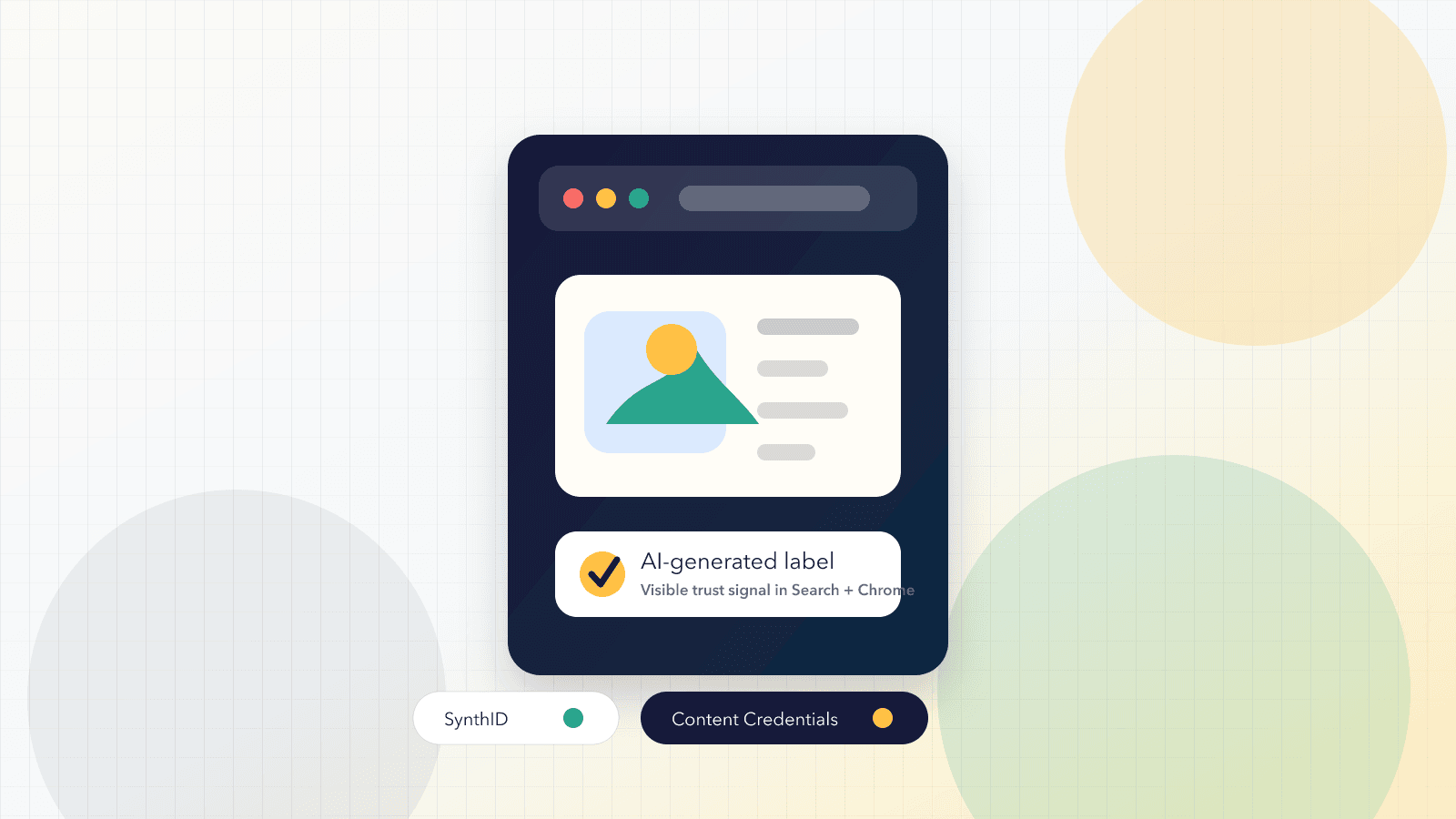
Start DiagnosisGoogle is rolling out something called SynthID across Search and Chrome. It's a technology that can tell when a photo, video, voice clip, or piece of text was made by AI. Within the next few months, when someone right-clicks an image online, they'll be able to see a label that tells them whether it was AI-generated.
That sounds technical. It's not. It's actually one of the most interesting shifts I've seen in years, and once you understand what's happening, I think you'll see why it works in favor of real businesses doing real work.
Think of SynthID as an invisible signature inside AI-made content. You can't see it. Your customer can't see it. But Google can.
If a photo was made with AI, there's a hidden marker in the pixels. If audio was made with AI, the marker is in the sound. If text was written by AI, the marker is in the pattern of word choices.
The clever part is that the signature survives screenshots. It survives editing. It survives someone trying to strip it out.
Watermarks have existed forever. This one is different because it doesn't go away.
This is the part I find genuinely fascinating.
SynthID isn't working alone. There's a second system called C2PA, which stands for Content Credentials. It's backed by Google, Adobe, Microsoft, Meta, and most major camera companies. They're all building it together, which almost never happens.
Here's the easy way to understand the two:
SynthID is like DNA. Hidden in the content. Hard to remove.
C2PA is like a nutrition label. It shows the history of the file. What made it. What edited it. When. Where.
One is invisible and stubborn. The other is visible and detailed. Together they tell the story of where a piece of content came from.
This is what Search and Chrome will use when they start showing people whether content is real or AI. It's not one company doing this. It's the whole industry agreeing on a standard, which tells you how seriously this is being taken.
Here's where I want to be really clear, because there's some confusion floating around already.
This is not Google penalizing AI content. Google has said this many times. They don't care if AI helped you write your website or make a graphic. What they care about is whether the content actually helps the person reading it.
A blog post written with AI that genuinely answers a customer's question? Great. A website built using AI tools that loads fast and gives people what they need? Great. A voice assistant that picks up the phone when you can't? Also great.
What Google has always rewarded is content that helps people and businesses that operate honestly. That hasn't changed. If anything, this shift makes that rule clearer.
So if you've used AI to help build your business, that's totally fine. There's nothing to redo. Nothing to undo. Keep using the tools that make your business better.
There's one place worth paying attention to, and I think most business owners will actually be happy about it.
The pictures on a website that are supposed to be real people. The team photo. The owner's headshot. The customer testimonial shot. When those are real, customers will now have a way to see that they're real. That's a trust boost that didn't exist before.
For business owners who show up authentically, who put their real face on their website, who collect real reviews from real customers, this shift makes that authenticity more visible than it used to be. The honest work you've been doing becomes easier for customers to recognize.
What I think is really happening here is that the internet is getting an honesty layer. For years, the rule was whoever ranks highest wins. The next rule is going to be whoever can be trusted wins.
This is great news for the kind of businesses I love working with. The ones with real reviews from real customers. Real photos of real work. A real person answering the phone. For a long time, those businesses had to compete against giants with massive marketing budgets. Now the things that make them special are getting easier for customers to see.
Trust used to be invisible. The internet is about to start making it visible.
That's the shift I find genuinely exciting. The businesses that show up honestly, that do good work, that treat customers well, are about to have a much easier time standing out.
I'll keep sharing what I notice as this rolls out further. There's a lot more coming, and most of it points in the same direction.
— Corné
TechStack Co-founder
Corné van Willigen writes from TechStack's operator perspective, focusing on the systems where local demand turns into booked work, trust, or disappears.
Reviewed for clarity, search intent, and operational usefulness by TechStack Editorial.
Last reviewed
Google DeepMind
Content Credentials
Google Search Central
Google Search Central
Questions
SynthID is Google's invisible watermarking technology for AI-generated content. It can mark and help identify AI-generated images, video, audio, and text without adding a visible label to the media itself.
C2PA Content Credentials are provenance records that can show how a piece of media was created or edited. Think of them as a visible history layer that travels with supported files and tools.
Google's public guidance focuses on helpful, reliable, people-first content rather than whether AI was used. The bigger risk for small businesses is misleading visitors with synthetic photos, fake reviews, or fake proof.
Start with images that imply a real person or real customer experience: owner headshots, team photos, customer photos, project photos, testimonials, and before-and-after proof.
Replace them with real photos where trust matters, or label creative AI imagery clearly. AI visuals can be useful, but they should not pretend to be real staff, real customers, or real completed work.
Next move
Start the quiz to surface the real leak and get routed toward the most relevant partner path.
Plain-English notes on missed calls, faster follow-up, reviews, AI answering, and small fixes that help service businesses book more jobs.