When should a business use a Digital Voice Agent?
When calls get missed, after-hours demand is real, basic qualification is repeatable, and the business has a clear handoff process for what the Agent captures.

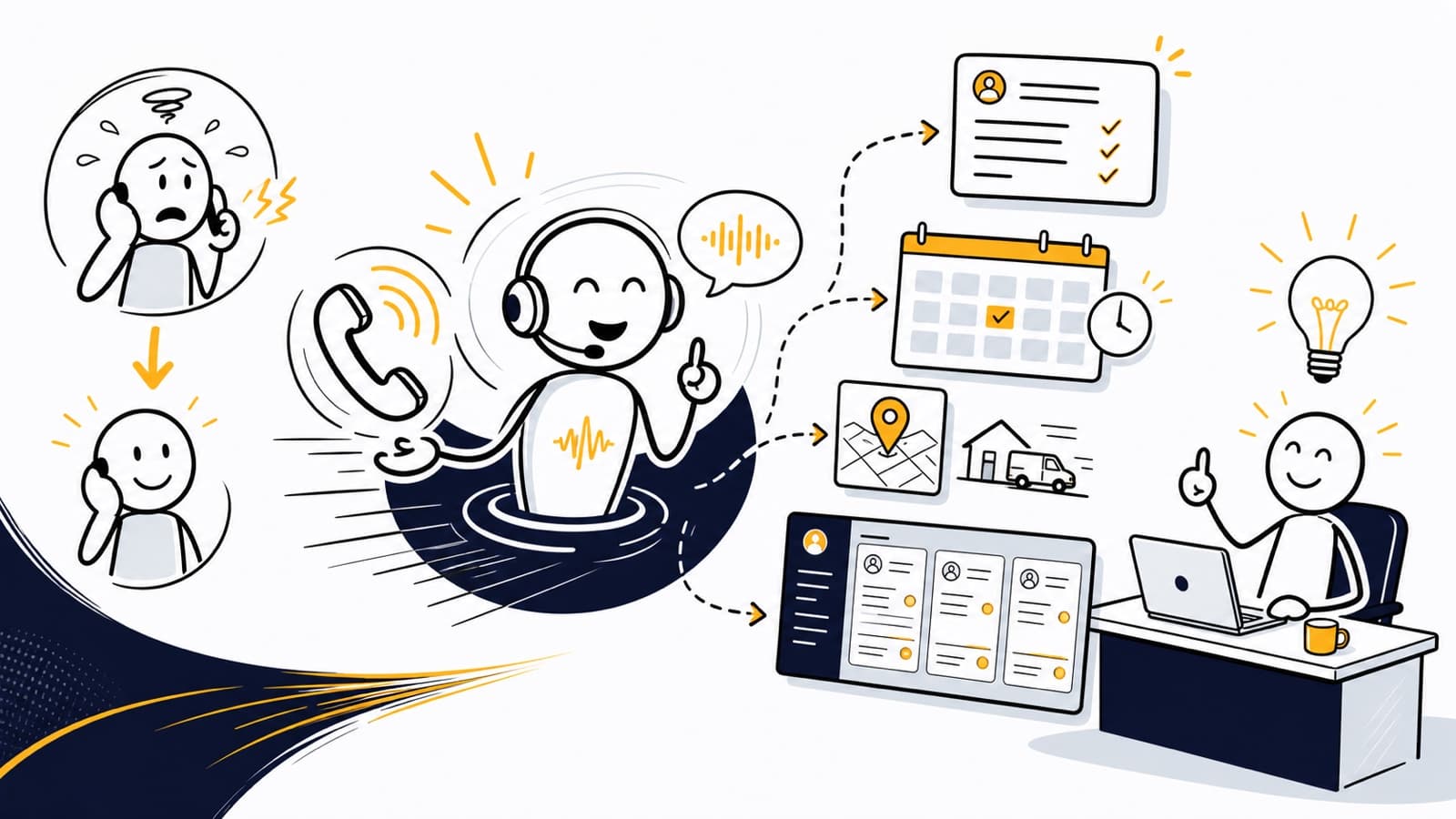
Why early adopters are treating 24/7 call capture like infrastructure instead of a science experiment.
Bottom line
A Digital Voice Agent earns its keep when it protects buyer intent: answering missed and after-hours calls, qualifying basic requests, routing urgent issues, and handing the team a clean summary they can actually use.
Need the right next step?
Take the 2-minute TechStack quiz and we’ll point you to the right fix before you browse partners.
Start DiagnosisDigital Voice Agents are useful when they solve a plain business problem. Calls show up when people are busy, closed, or inconsistent. The tech matters less than the workflow around it. Way less.
The best way to size up a Digital Voice Agent, yes, the same thing some folks call an AI voice agent, is to forget the buzzwords for a minute.
Ask what actually happens when a prospect dials your business.
Is the call answered? Is the reason for the call captured? Is the person qualified? Can they book, ask for a quote, or get routed to the right human? Does the team get a clean summary? Does the next step show up in the CRM or job board where somebody can act on it?
If the answer is no, you don't have a tech problem. You have a call-handling problem.
A Digital Voice Agent might be the fix. A human receptionist might be the fix. An answering service. Better routing. A tighter intake script for whoever's at the desk. All of those are real options.
The point isn't to pick the trendy one. The point is to pick the operating model that protects buyer intent at a cost and quality level your business can support.
Digital Voice Agents shine when the call flow is predictable enough to design. Appointment requests. After-hours intake. Missed-call recovery. Basic qualification. Service-area checks. Routing the urgent stuff to the right tech.
Complex disputes, sensitive support, emergencies, and high-stakes sales conversations? Those still need a human on the line. Probably will for a while.
Demand has a shelf life.
When a customer calls a plumber, roofer, dentist, med spa, repair company, or local consultant, they're usually trying to solve a problem they have right now. They're not going to wait for the perfect provider. They're going to pick the one that answers clearly and makes the next step easy.
The InsideSales/XANT lead-response research has been pointing the same direction for years. So have most of the other sales-ops studies. The numbers move around by study and industry. The principle doesn't budge. Respond fast and your contact rates go up. Respond fast and your qualification rates go up.
You don't have to buy any headline multiplier to buy the operating truth underneath it.
The longer a buyer waits, the more likely they are to forget. Compare. Cool off. Call somebody else.
This is where a Digital Voice Agent earns its money. It stretches your coverage past the hours your staff can physically work. Lunch. After hours. Weekends. Call spikes when three calls come in at once and one of them rings out.
It also writes everything down. So you stop running your business on memory and voicemail.
A good one has a narrow job.
Greet the caller. Understand why they're calling. Collect the minimum useful info. Confirm urgency. Check fit. Route the conversation. If booking makes sense, offer real times. If a human is needed, hand it off clean. If the caller is outside your service area or asking for something you don't do, say so honestly.
It should also write things down.
The call summary should include name, phone number, reason for the call, urgency, requested service, location, preferred time, and the next action. That summary has to land somewhere the team actually uses. The CRM. The dispatch board. The inbox. The job management tool. The calendar. Whichever one is real.
Most bad rollouts fail because they stop at answering the phone. Answering is step one. The value comes from the handoff.
I've seen owners spend three months getting their Agent to sound human and then route every summary to an email folder nobody opens. That's not automation. That's a new bottleneck wearing a suit.
Three mistakes show up over and over.
First mistake: pretending the Agent can handle everything. It can't. Customers get frustrated when the system overreaches, misreads urgency, or blocks them from reaching a human. The fix isn't making the Agent sound more lifelike. The fix is writing clear escalation rules and respecting them.
Second mistake: weak knowledge. If your Agent doesn't know your service areas, your hours, your pricing boundaries, your emergency rules, your appointment types, or what info your staff actually needs to book a job, it'll collect the wrong stuff. Politely. Confidently. And uselessly.
Build the call flow from real calls. Not from a generic script some vendor pulled off a shelf.
Third mistake: no measurement. Track answered calls, qualified calls, booked calls, escalations, missed calls, complaints, staff corrections, and duplicate work. If you can't tell whether the Agent helped or hurt, you're running a demo. Not an operating system.
Start with a 30-day call audit.
How many calls came in? How many were missed? How many came after hours? How many were real sales opportunities versus spam and vendors? How many callers left voicemail? How fast did the team return calls? How many turned into bookings?
These numbers matter more than any vendor pitch. By a lot.
Then run the conservative math. Use gross profit, not revenue, if you can. If recovering a small number of qualified calls would cover the system, it's worth testing. If your call volume is low, or most calls need complex human judgment, a Digital Voice Agent might not be the right patch. A better intake process might serve you more.
When you do pilot one, keep it narrow. After-hours intake. Missed-call text-back. Appointment requests. Overflow during call spikes.
Review the transcripts weekly. Update the script. Ask your staff whether the handoff is actually useful. Listen to real calls. Yes, real ones, not vendor highlight reels.
The best systems get better because the business treats them as operations. Not magic.
A Digital Voice Agent isn't valuable because it's trendy. It's valuable when it cuts missed demand, speeds up first response, and creates cleaner handoffs.
For service businesses, that can be a big deal. Because calls usually live close to purchase intent. Closer than almost anything else you can measure.
The right question isn't should we use a Digital Voice Agent?
The right question is: what happens to a buyer when you're too busy to answer?
If the answer is voicemail, silence, or a messy callback process, you have a leak. A Digital Voice Agent may be the right patch. But only if you design it around the real call path, not the demo reel.
Sometimes a human at the desk is still the better answer. That's fine.
Pick the operating model that protects buyer intent. The tech is just the delivery mechanism.
TechStack Founder
Corné van Willigen writes from TechStack's operator perspective, focusing on the systems where local demand turns into booked work or disappears.
Direct-Response Marketing Strategist
Perry Belcher contributes direct-response strategy around buyer intent, offer clarity, trust signals, and conversion-focused messaging.
Reviewed for clarity, search intent, and operational usefulness by TechStack.
Last reviewed
Google Search Central
Google Search Central
Questions
When calls get missed, after-hours demand is real, basic qualification is repeatable, and the business has a clear handoff process for what the Agent captures.
Name, phone number, service need, location, urgency, availability, and the next action the team has to take. Nothing more. Nothing less.
When they try to handle everything. When they do not know the business well enough to ask the right questions. Or when they create summaries the staff cannot actually act on.
Usually no. It should protect intake and handoff, not replace judgment. The smart play is capturing basic info fast so your humans can spend their time on higher-value conversations.
Next move
Start the quiz to surface the real leak and get routed toward the most relevant partner path.
Plain-English notes on missed calls, faster follow-up, reviews, AI answering, and small fixes that help service businesses book more jobs.